
Local Law 11 (FISP) Cycle 10: What NYC Building Owners Must Do
If your building is over six stories, your facade filing deadline is already set by your tax block number. Here is your window, what the report can say about your building, and which repairs usually follow.
Find your filing window
Based on the last digit of your tax block numberFISP Cycle 10 runs from February 2025 to February 2030. Every NYC building taller than six stories must have its facade examined by a Qualified Exterior Wall Inspector and a report filed with the DOB inside a two year window set by the last digit of the tax block number. As of 2026, the 10A and 10B windows are both open.
Most owners meet Local Law 11 twice: once when the filing notice lands, and again when the inspection report comes back with a list of conditions to repair. The inspection itself is the small part. The masonry work that follows is where the budget goes, and where the timeline is either manageable or painful.
This guide covers the Cycle 10 calendar, what the three report classifications actually mean, and which repairs show up most often on NYC brick and stone facades.
Cycle 10 filing windows by block number
The DOB staggers the city into three sub cycles so the whole building stock is not inspected at once. Your sub cycle comes from the last digit of your tax block number, which you can find on your property tax bill or through the DOB Building Information System.
| Block ends in | Sub cycle | Filing window | Status in 2026 |
|---|---|---|---|
| 4, 5, 6, 9 | 10A | 21 Feb 2025 to 21 Feb 2027 | Open, closing first |
| 0, 7, 8 | 10B | 21 Feb 2026 to 21 Feb 2028 | Open |
| 1, 2, 3 | 10C | 21 Feb 2027 to 21 Feb 2029 | Not yet open |
If your block ends in 4, 5, 6 or 9, you are in the window that closes first, in February 2027. That sounds far away until you account for hiring a QEWI, scheduling access, doing repairs and filing. Owners who start twelve months out rarely have a problem. Owners who start two months out often do.
One more Cycle 10 change worth knowing: buildings whose last status is No Report Filed can now file an early initial report through DOB NOW: Safety to stop civil penalties accumulating, rather than waiting for their assigned window.
Confirm your own date before you plan around it
Block numbers, prior cycle status and any open violations can all affect what applies to your building. Check your record in DOB NOW: Safety or ask your QEWI to confirm the window in writing before you build a repair schedule around it.
Safe, SWARMP or Unsafe, and what each one costs you
The QEWI classifies the facade into one of three categories. The category decides your next five years.
Safe
No hazardous conditions found. Nothing is required beyond keeping records and preparing for the next cycle. Rare on older brick buildings that have not been pointed in decades.
SWARMP
Safe With A Repair and Maintenance Program. Conditions are not dangerous today but will be if ignored. They must be corrected before the next cycle, and unrepaired SWARMP items can escalate later.
Unsafe
Conditions that pose a present hazard. Public protection goes up immediately, repairs cannot wait, and an amended report is required once the work is complete.
The category most owners land in is SWARMP, and that is the one worth planning for. It gives you a defined list of conditions and a runway to fix them on your own schedule instead of under a shed. Ignore it and the same conditions come back in the next cycle, usually worse and sometimes reclassified.
What gets flagged on a brick facade
Across NYC brick buildings, the same conditions come back cycle after cycle. Almost all of them are pointing, brick and parapet work.
Deteriorated mortar joints
Open, washed back or crumbling joints. The single most common flagged condition, and the reason brick pointing and repointing is the core of most FISP repair scopes.
Cracked and spalled brick
Face shells breaking away after years of freeze thaw. Individual units get cut out and replaced with matching brick.
Parapet and coping problems
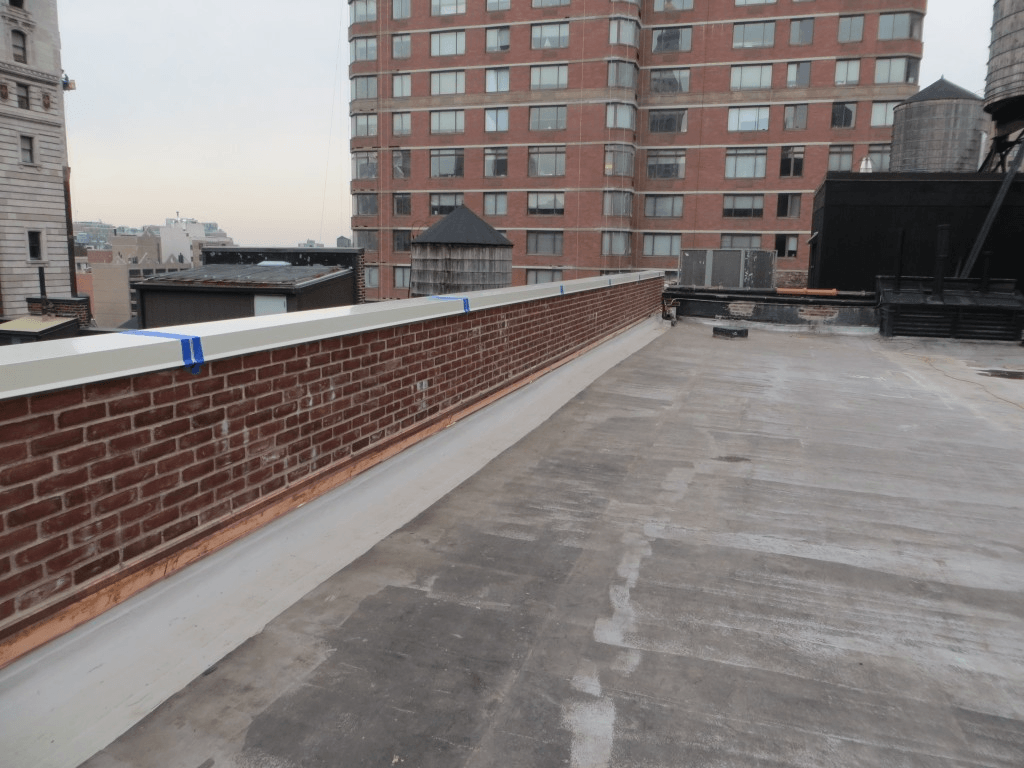
Leaning parapets, open coping joints and loose sections at the roof edge, which are treated seriously because of what is below them.
Lintels and sills
Rusting steel lintels expand and push the masonry apart above windows. Left alone, they crack the surrounding brickwork.
Failed sealant and flashing
Open joints at windows, setbacks and terminations where water enters and then works its way through the wall.
Loose or displaced masonry
Anything that could fall. This is the category that pushes a report toward Unsafe rather than SWARMP.
We handle these scopes across the five boroughs, from single condition repairs through full facade restoration, along with the DOB violation paperwork that often comes attached. For larger commercial and multi building scopes, our team also works through Pioneer Construction NYC masonry.
How a Cycle 10 filing actually runs
Confirm the window
Check the block number, the sub cycle and the building's status from the previous cycle. Any unrepaired SWARMP items from Cycle 9 carry forward.
Hire a QEWI
Only a Qualified Exterior Wall Inspector, a licensed professional engineer or registered architect with the required experience, may perform the examination and file the report.
Critical examination
A close up, hands on inspection of the facade and appurtenances, which usually means scaffold drops or a suspended rig rather than binoculars from the street.
Report filed in DOB NOW: Safety
The QEWI files the technical report with the classification and the condition list attached.
Repairs
Unsafe conditions get addressed immediately. SWARMP conditions get corrected within the timeframe the QEWI sets, and this is where the masonry contractor comes in.
Amended report and records
Once unsafe conditions are repaired, an amended report is filed. Keep the photos, scope and invoices, because the next cycle starts from this paperwork.
The sequencing mistake that costs the most
Owners who wait for the report before talking to a masonry contractor lose months. Getting a repair contractor to walk the building before the QEWI examination gives you a realistic budget early, and lets obvious repairs happen before the classification is written.
What happens if the filing is late
Late filing carries DOB civil penalties that accumulate over time, and buildings with no report on record accrue penalties as well. The amounts are set by the DOB and change over time, so confirm current figures directly with the department or your QEWI rather than trusting a number in a blog post.
The bigger cost is usually not the penalty. It is what happens around it: a building classified Unsafe needs public protection put up quickly and kept up until the work is signed off, and a sidewalk shed rented month after month outruns the repair bill it was protecting against. Every month of delay makes the same masonry work more expensive.
Local Law 11 FAQs
Which buildings does Local Law 11 apply to?
How do I find my FISP filing deadline?
Can my masonry contractor file the FISP report?
What does SWARMP mean for my building?
Do FISP repairs need a DOB permit?
How early should we start?
Facade report in hand, or deadline coming up?
Send us the condition list or the block number. We walk the building, price the pointing, brick and parapet work honestly, and get it done inside your filing window across all five boroughs and Westchester.
Get a Free Estimate