
Tuckpointing vs Repointing: Which One Does Your Brick Actually Need?
If two masons looked at your building and one said "you need repointing" and the other said "tuckpointing," you're not imagining the confusion. Most people use these words to mean the same thing, and even contractors mix them up. Here's the clean version: repointing is the real repair, cutting out crumbling mortar and packing the joints with fresh mortar, while tuckpointing, in its true sense, is a decorative finish that uses two mortar colors to fake crisp, thin joints. For almost every NYC building with failing brickwork, what you actually need is repointing.
Let's clear it up completely, so you know exactly what to ask for, what the work involves, what it should cost, and how to avoid paying for the wrong thing.
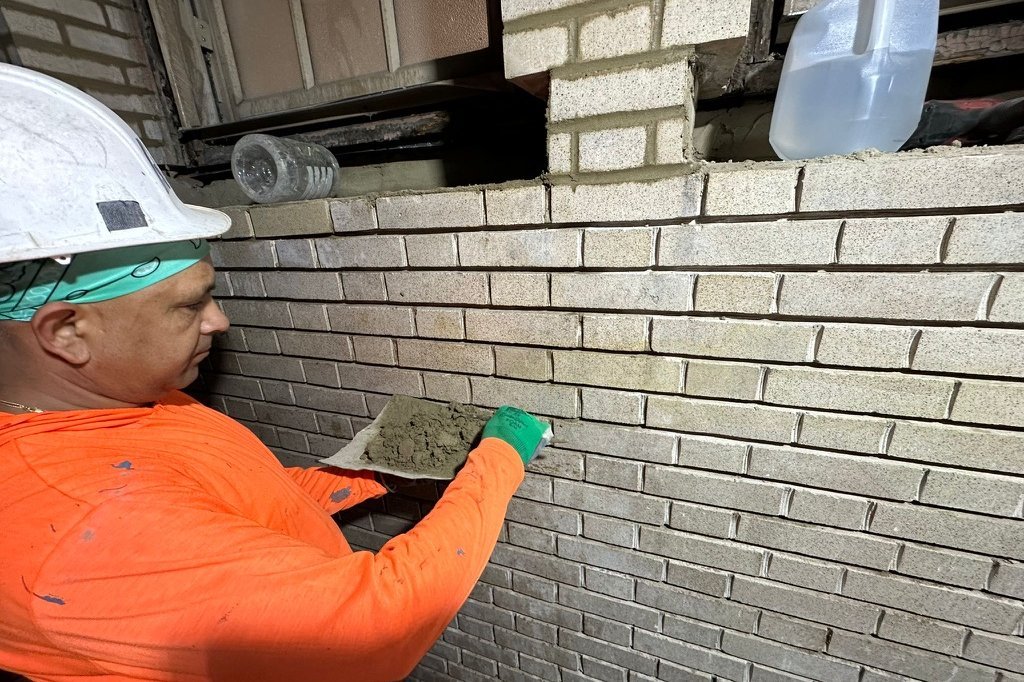
What repointing actually is
Repointing is the structural fix. A mason grinds or chisels out the old, failed mortar from between the bricks, then packs in fresh mortar and tools it to shape. This isn't about looks, it's about keeping water out, sealing the gaps, and stopping the wall from crumbling.
Why it matters so much in New York: mortar is what holds the load and keeps moisture out of the wall. When it fails, water gets in, freezes, expands, and the damage accelerates fast through our freeze-thaw winters. Left alone, failed joints lead to spalling brick, loose bricks, and eventually bulging or structural problems. Done right, repointing can extend the life of your brickwork by decades, which is why it's one of the highest-value repairs you can make on a masonry building.
What tuckpointing actually is
True tuckpointing is a craft technique, and historically it wasn't a repair at all. The mason fills the joint with mortar color-matched to the brick, then presses a thin line ("fillet") of contrasting mortar into it to create the illusion of very fine, precise joints. It was invented in 18th-century England to make ordinary brick mimic expensive hand-rubbed brickwork. It's about appearance, not structure.
In everyday conversation, though, most people (and many contractors) say "tuckpointing" when they mean repointing. So when you get a quote that says "tuckpointing," ask what's actually being done: cutting out and replacing failed mortar (repointing), or a decorative finish on sound joints (true tuckpointing). The words matter less than the work, and a good contractor will explain exactly which one your wall needs.
How to tell if your joints have failed
You don't need a mason to spot the early signs, and there's a simple field test the professionals use.
The everyday signs:
- You run a finger along a joint and it comes back gritty, with a little pile of sand at your feet where the mortar used to be
- Hairline gaps you can slip a coin into
- A chalky white bloom (efflorescence) creeping across the wall, which means water is moving through the masonry
- Receding or crumbling mortar that sits noticeably back from the face of the brick
- Damp patches or staining appearing on the inside face of an exterior wall
The screwdriver test: drag a screwdriver or a key across a mortar joint. If the mortar powders, scrapes, or crumbles away, it has failed and the joint needs repointing. If it's hard and holds, you're likely fine for now. It's worth checking a few different spots, since a wall often fails on the weather-facing side long before the rest.
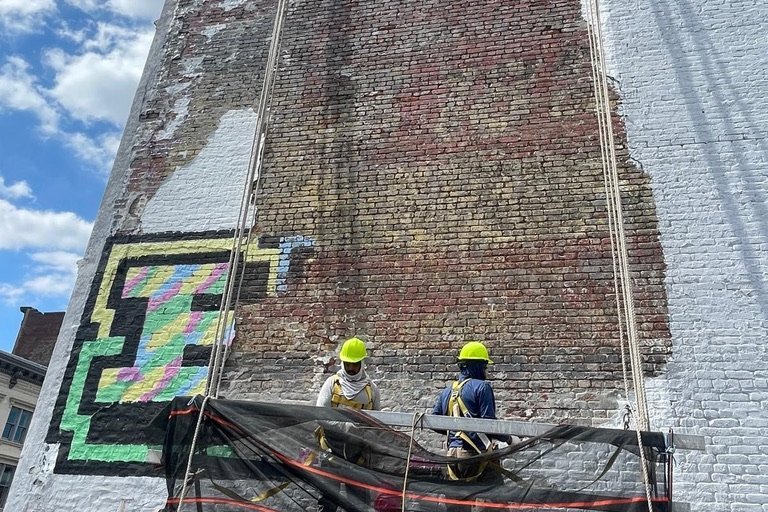
What the repointing process actually looks like
Knowing the steps helps you tell a proper job from a rushed one:
- Rake out the old mortar. The failed mortar is ground or chiseled out to a depth of at least twice the width of the joint (usually a minimum of half an inch). Too shallow and the new mortar won't bond or hold; this is the step cheap crews skip.
- Clean and dampen the joints. Debris and dust are cleared out, and the joints are lightly dampened so the surrounding brick doesn't suck the moisture out of the fresh mortar too fast.
- Mix mortar to match. The new mortar is mixed to match the original in strength and composition (more on why that matters below).
- Pack the joints. Mortar is pressed into the joints in thin layers so it fully fills the void, not just skims the surface.
- Tool the joints. Once it's firm, the mason shapes the joint (concave, weathered, or to match the existing profile) to shed water and match the look of the building.
- Cure. The mortar is kept from drying too quickly so it reaches full strength.
Rushed jobs show up fast: shallow raking, smearing mortar over the face of the brick ("bag jobs"), and skipping the tooling all lead to joints that pop out within a season or two.
The mortar matters more than the name
Here's the part cheap jobs get wrong, and it's the most important thing on this page. The new mortar has to match the old mortar, especially on older NYC buildings.
Many pre-war NYC buildings and brownstones were built with soft, lime-based mortar. If a contractor repoints them with hard modern Portland-cement mortar, because it's cheaper, faster, and sets harder, the rigid mortar traps moisture and stress in the softer brick, and the brick faces start to spall and crumble. The mortar is supposed to be the sacrificial element that wears before the brick does. Get it wrong and you accelerate the exact damage you were trying to fix, turning a mortar problem into a much more expensive brick-replacement problem.
This is why matching the mortar's composition, and on historic or landmark buildings often its color, is not an upsell. It's the difference between a repair that lasts thirty years and one that damages your building within a few.
What brick repointing costs in NYC
Pricing varies with the size of the job, the height of the wall, and access, but as a general guide for New York City:
- Small spot repairs and single-wall work often land in the few-hundred to low-thousands range
- Repointing a full facade on a rowhouse typically runs into the low-to-mid five figures
- Chimneys, parapets, and anything requiring scaffolding or a swing stage cost more because of access and safety setup
Two things drive NYC prices up more than homeowners expect: our high labor and insurance costs, and access. A wall you can reach from the ground is far cheaper to repoint than an upper facade that needs a sidewalk shed, pipe scaffold, or a swing stage. Historic and landmark buildings add cost too, because the mortar has to be matched and, in many districts, approvals are required before work begins.
Can you DIY it?
You can repoint a small, low section yourself, and plenty of homeowners do a few feet of garden wall. But there are real reasons most brickwork gets hired out: raking to the right depth without damaging the brick takes the right tools and a feel for it, matching mortar (especially on soft old brick) is easy to get wrong, and anything above the first floor becomes a safety and access job. Getting the mortar wrong is worse than doing nothing, so for the facade of a building it's usually money well spent to hire a mason who does this daily.
So which do you need?
- You almost certainly need repointing if your joints are cracking, receding, letting water in, or failing the screwdriver test. This is the actual repair, and it comes first.
- You might want true tuckpointing if your brickwork is structurally sound and the mortar is intact, but the joints look uneven, stained, or tired and you want a crisp, refined appearance.
- Sometimes a building gets both: the wall is repointed to make it sound, then finished for appearance.
If your main concern is cracks, gaps, or water getting in, repointing is the answer, and getting the mortar right matters more than what anyone calls it.
Frequently asked questions
How long does repointing last?
How often should brick be repointed?
Can you repoint in winter?
Will repointing stop my wall from leaking?
Get it done right the first time
At Makkah Brick Pointing we do structural repointing across all five boroughs, and we match the mortar to your building instead of defaulting to whatever's fastest, which is what protects soft, older brick from spalling. If you're not sure whether your joints have failed, we'll take a look and tell you straight, no pressure to do work you don't need.